


I think you begin knowing a place only after you’ve visited it multiple times, and ideally across seasons. So, when our local land trust, 7 Lakes Alliance, offered a spring birding walk at Fogg Island Preserve in Mount Vernon, Maine, back in June I joined in.
Fogg Island Preserve, a 469-acre conservation property, is bordered by more than two miles of undeveloped shoreline on Ingham Stream and lower Long Pond. It’s home to vernal pools, a beaver pond, and various forest and wetland plant and animal species. Its 2+ mile Fogg Island Trail (my Garmin thinks it’s 2.5 miles each way) is the newest trail in the 7 Lakes Alliance system. Unlike other 7 Lakes trails I’ve run, hiked, and skied countless times over the past two decades, I’d only been to Fogg Island twice (once in summer and once in winter) since it opened in 2020. This was an opportunity to know it better.
The Fogg Island hike is a peaceful 4 to 5 mile out-and-back walk in the woods through various habitats. Tucked away from more popular local recreation spots, it’s generally much quieter than other trails in the Belgrade Lakes area. But, first, you need to find it. To reach the parking area, follow the signs for Fogg Island Preserve on Spring Hill Road in Mount Vernon (stay left). From here, the trail starts behind a gate as an old logging road, passing through woods, and, in springtime, by numerous vernal pools.


Stay right on this main trail, following the 7 Lakes Alliance signs, and you’ll reach a picturesque beaver pond on your left. Despite stopping and looking thoroughly each time I’ve passed by, I have yet to see a beaver here. Are any out there?


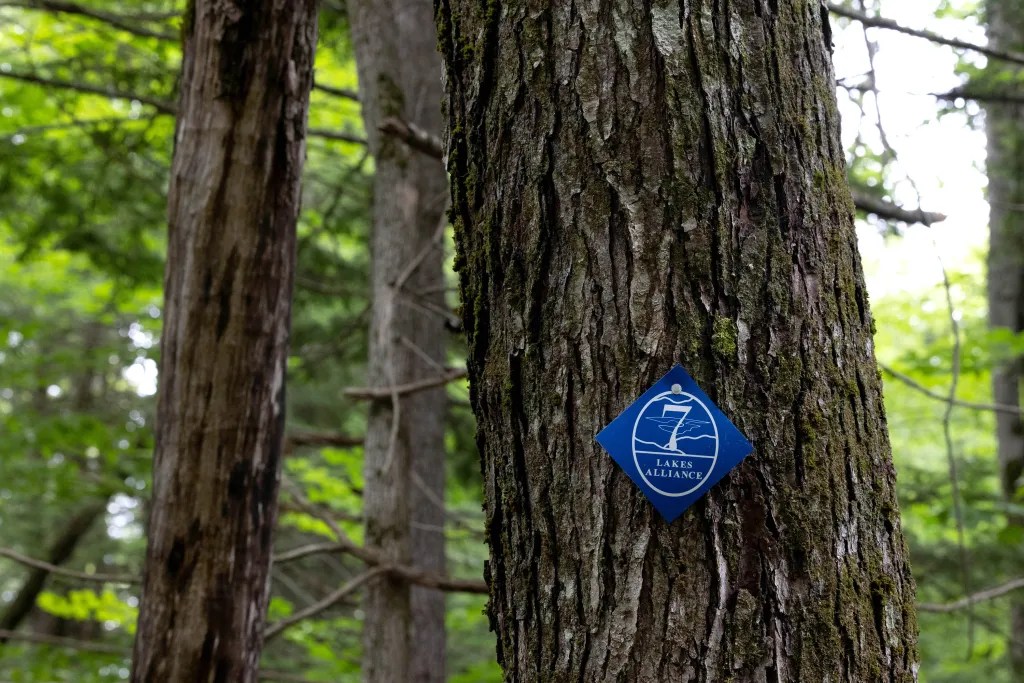
Past the beaver pond, continue on this wide trail, until the blue trail signs lead you off to the left, into the woods, and onto singletrack trail. Now you pass through upland and eventually wetland forests.


Around the 2-mile mark, as the area becomes wetland, cross a boardwalk/bog bridge to the namesake Fogg Island. The trail soon dead-ends at the shore of Long Pond. Alternatively, you could skip the walk and paddle a kayak or canoe to reach this spot. However you arrived, by land or by water, there’s a picnic table nearby for lunch or a snack. When you’re ready, turn around and walk back from whence you came.


Fogg Island is a quieter, understated hike. At about 5 miles round trip, and with only 479 feet of elevation gain, it’s an easy to moderate hike for many. The goal is not a summit or grand vistas, but a journey through numerous native habitats. It’s a chance to get to know an area that provides significant and contiguous wildlife habitat.
Wait, wasn’t this a birding hike? Yes, and it was a reminder that birding means listening, not just looking. Our small group heard ovenbirds and a hermit thrush, warblers, a loon, a winter wren, and more. Seeing the birds was another matter; I glimpsed a Great Blue Heron on the lakeshore, Brown Creepers climbing trees, American Black Ducks flying at the far end of the beaver pond, a hawk flying across the trail. In total, I recorded 20 species on our walk. Additionally, sparrows, grouse, osprey, vireos, and many more have been recorded on eBird, and sandhill cranes and barred owls have been seen as well.
I took almost no pictures of the preserve’s birds on this birding walk, but I wasn’t disappointed. Dragonflies galore, a porcupette hiding behind a tree, butterflies, mushrooms, trees, flowers—Fogg Island Preserve has hidden treasures to see and hear, to tune into, to get to know better. I’ll be back for fall.


Click on any image and you can scroll through the galleries above.
Fogg Island Trail Tips:
- The parking area is at the end of an access road off Spring Hill Road in Mount Vernon, Maine. There are numerous private property signs, but keep driving down the road, staying left, and you will get to the parking area. In winter it’s not plowed all the way, but you can hike or ski in.
- Wear long pants. There can be ticks and occasionally poison ivy.
- Bring bug spray, especially in spring.
- During hunting season wear hunter orange; same for your leashed dog.
- Follow the 7 Lakes Alliance blue trail markers, especially where it branches off the main logging road.
- No motorized vehicles are allowed, except for snowmobiles in winter.
- 7 Lakes Alliance trail map and info